
The Peninsula & Historic Neighborhoods
Outdoor Lighting in Charleston, SC
Quiet, period-respectful light for piazzas, garden walls and old brick.
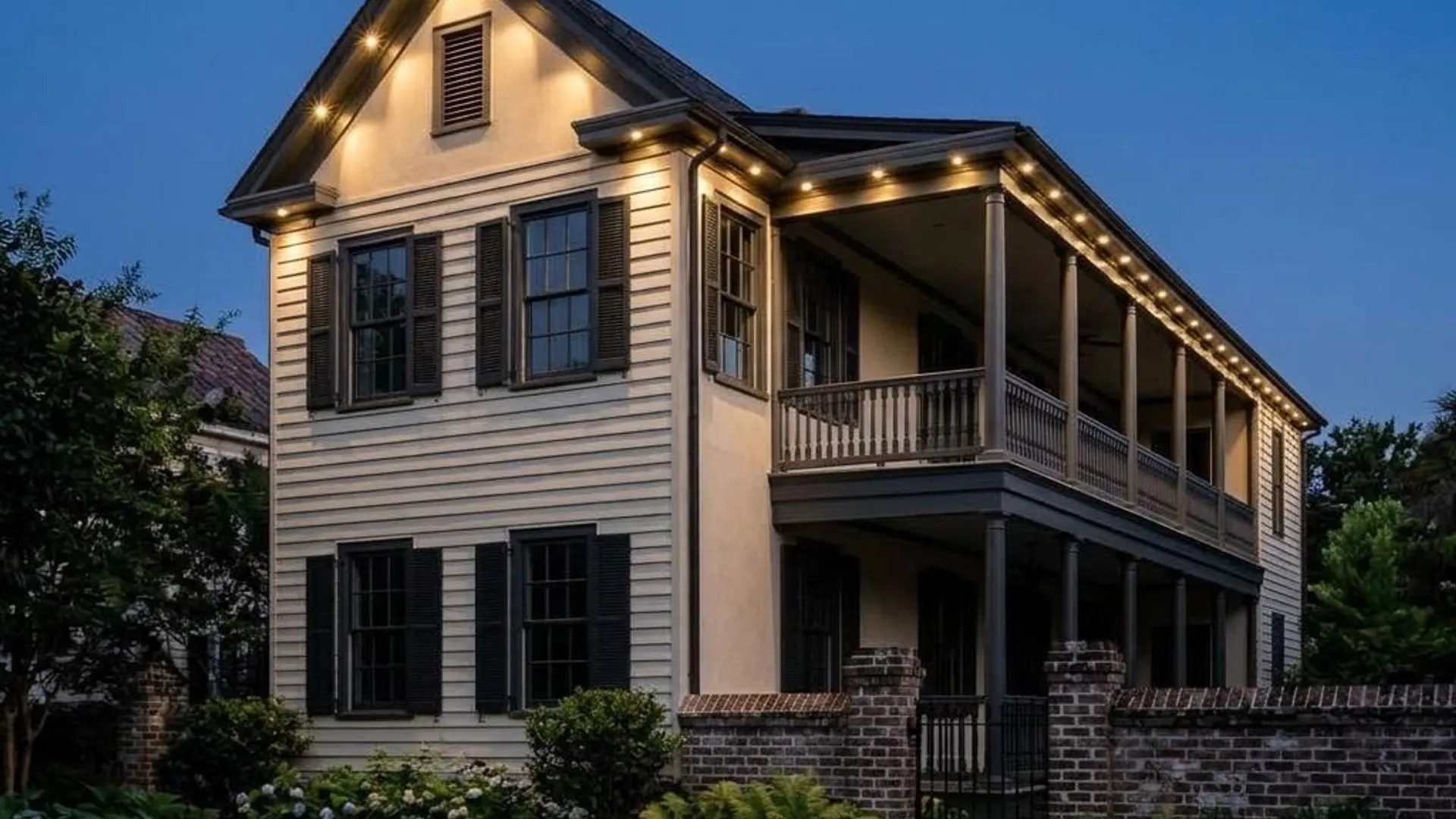
Charleston homes were built to be seen from the street, and most of them disappear after dark. We design lighting that reads as part of the architecture rather than an addition to it, then show it to you on your own facade at dusk before you decide anything.
Lighting for Charleston homes
Designing around the single house
The Charleston single house is one room wide, set gable-end to the street, with its piazzas running down the long side. That orientation changes how light should work. The street sees a narrow, tall face and a door that often opens onto a porch rather than into the house.
We usually start at that street door. Low path lights along the walk and a soft ground-mounted wash on the first piazza columns tell a visitor exactly where to go. From there, small in-ground uplights at the base of each column can draw the eye down the length of the piazza without lighting it like a stage.
Double houses, Charleston freedman's cottages and Victorian-era homes in neighborhoods like Wagener Terrace and Hampton Park each want a different hand. The principle stays the same: light the architecture people already admire, and leave the rest in comfortable shadow.
Brick, stucco and painted wood
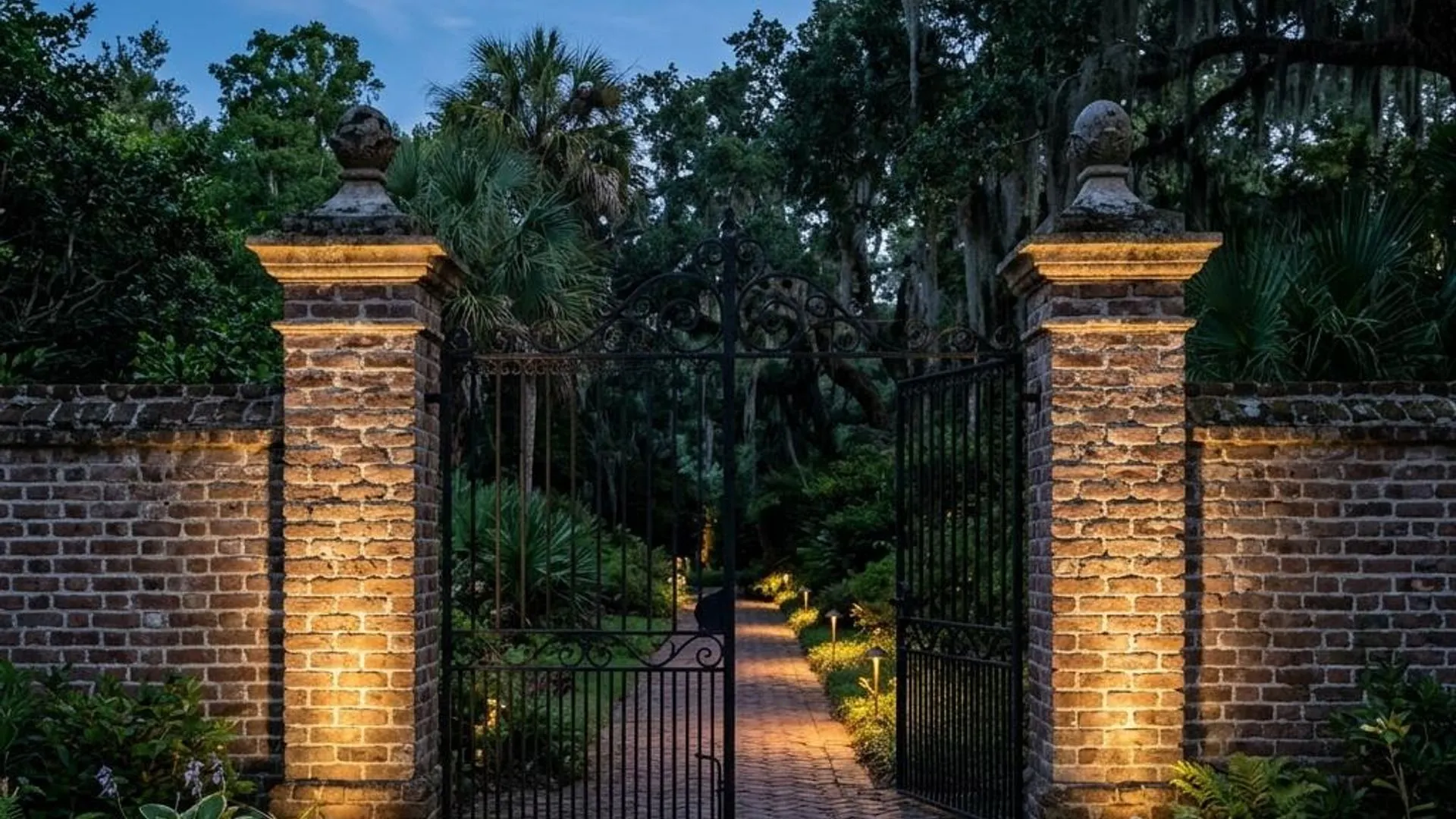
Old Charleston surfaces are uneven, and that is the point. Hand-laid brick, scored stucco and layers of paint all hold light differently. A fixture placed a few inches off a stucco wall will graze it and reveal every ripple. Pulled back a few feet, the same fixture gives a flat, even wash.
We choose between those effects deliberately. Grazing suits garden walls and chimneys with real texture. A gentler wash suits smooth painted clapboard, where hard shadows can look harsh. Warm color temperatures, typically in the 2700K range, keep brick looking like brick instead of orange or gray.
Walled gardens and narrow side yards
Many downtown lots give most of their outdoor space to a side garden behind a wall. These are intimate rooms, often only a few strides wide, and they reward restraint. One uplit specimen tree, a pair of path lights at a brick walk and a soft glow on a fountain can carry an entire garden.
Because neighbors sit close, we pay attention to glare. Shielded fixtures, careful aiming and modest output keep light inside your garden instead of in a neighbor's bedroom window. You should see the effect, not the fixture.
Architecture-first
Piazza columns, walls and steps washed from the ground, gables traced by roofline pixels.
Built for salt air
Solid brass and copper fixtures that patina instead of rusting.
Garden-scale
Low, shielded light sized for narrow walled gardens.
Glare-aware
Careful aiming that respects close neighbors.
Historic district considerations
Large portions of the peninsula fall within Charleston's historic districts, where the City's Board of Architectural Review oversees many exterior changes. Whether a particular lighting plan needs review depends on the property and the scope of work, so we do not guess.
Landscape lighting is usually low and removable, but anything mounted to a historic facade deserves care. Before installation we will talk through mounting locations, discuss whether City review may apply, and work from the guidance you or the City provide.
Salt air, flooding and fixture choice
Downtown sits a few feet above high tide, and low-lying streets flood during king tides and heavy rain. Salt air reaches nearly every garden on the peninsula. Painted aluminum fixtures from a home store tend to pit, flake and fail in this environment within a few seasons.
We choose fixture locations, connection methods and transformer placement with moisture and salt exposure in mind. Where a garden is known to hold water, we discuss routing and drainage before placing lights. Materials and installation details are selected for the conditions at your property rather than assumed from a photograph.
Permanent lighting on a historic roofline
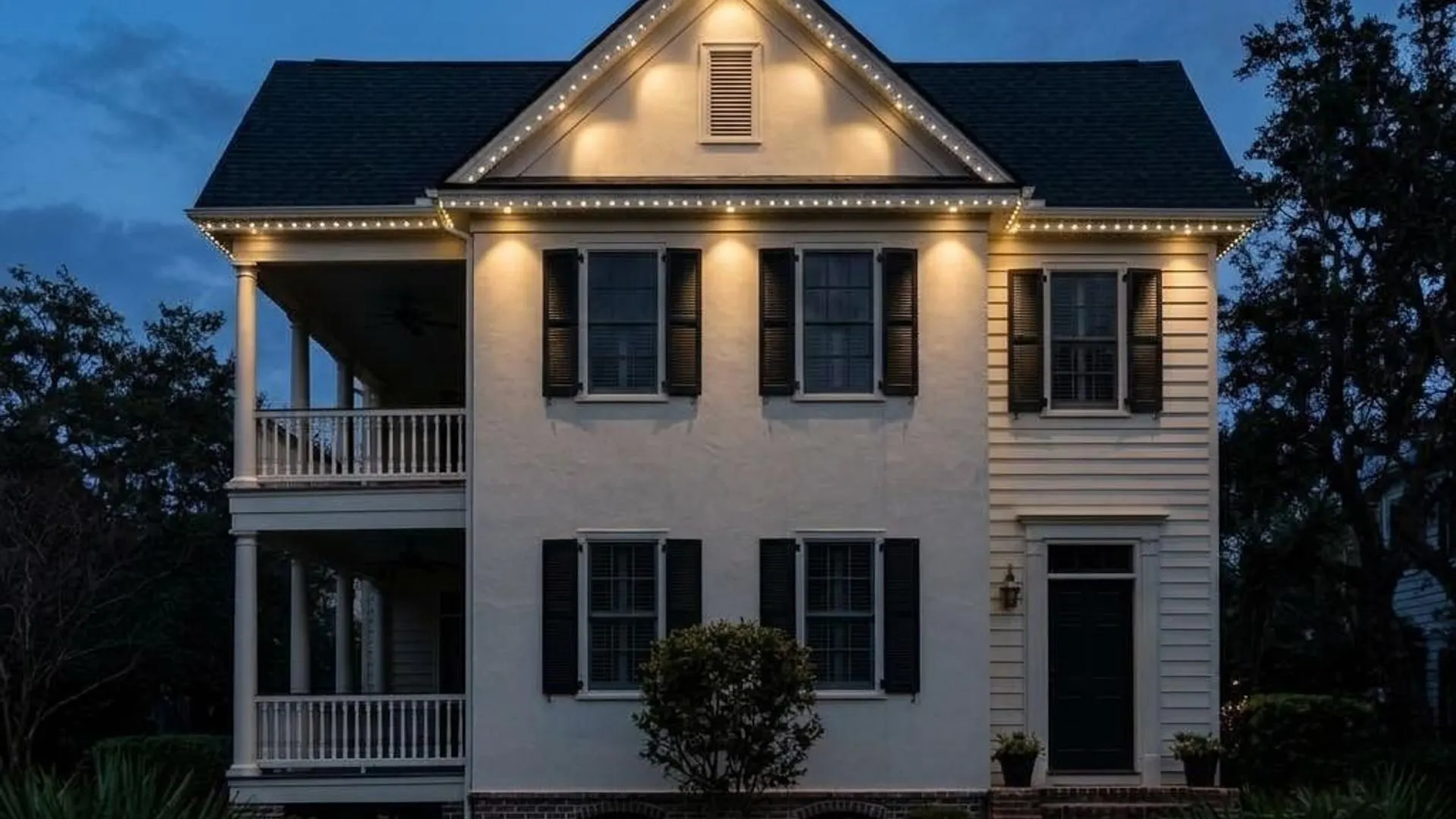
Permanent track lighting is not right for every Charleston home. On a Victorian with ornate trim, a visible channel can look out of place. On a renovated or newer home with a clean fascia line, a slim track painted to match can disappear by day and outline the roof softly at night.
We will tell you honestly which camp your house falls into. When permanent lighting does fit, we keep the default scene to steady warm white and save color for holidays you choose, such as Christmas or the Fourth of July.
Existing fixtures at the door and gate
Many Charleston homes already have their own gas or electric fixtures at the door or gate. We don't install, move or modify those; we design our ground lighting around them. Landscape lighting is kept a little softer so the existing fixture stays the brightest point at the entry, and color temperature is chosen to sit comfortably beside the flicker of a flame.
A note on scale
Charleston homes reward restraint. A plan with eight carefully placed fixtures often looks better than one with twenty. We would rather leave a corner in shadow than light something that does not deserve attention, and we will tell you when less is more for your particular house and garden.
Planning it for your house
Every Charleston facade is a little different, which is why every free quote is planned for your home. We talk through your goals for your piazza columns, garden wall or oak, recommend placements, provide written pricing and leave the decision to you. No pressure, and nothing installed until you say so.
Lighting Styles


Your free quote plans the right lighting for your own home.
Services in Charleston
Permanent Roofline Lighting
A slim, trim-matched track with individual pixels along the eaves. Warm white nightly, holiday color when you want it.
Learn moreLandscape Lighting
Warm uplights, moonlighting and path lights for oaks, palmettos, gardens and walkways.
Learn moreArchitectural Lighting
Ground-mounted facade and column wash, wall grazing, steps, pavers and driveway lighting.
Learn moreHoliday Lighting
App-controlled permanent lighting for holidays and occasions, without hanging and removing lights each year.
Learn moreMaintenance & Service
Cleaning, re-aiming and repairs that keep your system looking right.
Learn moreCharleston lighting questions
It depends on the property's location and what is being mounted where. Many exterior changes in Charleston's historic districts fall under the Board of Architectural Review. We will discuss mounting locations with you before installation and recommend confirming requirements with the City of Charleston when a historic facade is involved.
We use low-output in-ground uplights at the base of each column, low path lights to the street door and warm color temperatures. The goal is to guide the eye down the piazza, not flood it.
We use sealed, direct-burial-rated connections, solid brass fixtures and transformers mounted above typical splash height. No outdoor system is flood-proof, but these choices hold up far better than consumer-grade kits.
Yes. We use shielded fixtures, modest output and precise aiming so the light stays on your plantings and paths. We consider sight lines from neighboring windows when we plan your lighting.
Sometimes. On homes with clean fascia lines it can disappear by day. On ornate Victorian trim it can look out of place, and we will tell you so honestly when we prepare your quote.
Nearby towns we serve
Free Quote
See your piazza in a new light.
- 01
Request
Tell us about your home. It takes a minute.
- 02
We talk it through
Your goals, your property and what low-voltage lighting suits it.
- 03
You decide
Written pricing, no pressure. Nothing installed until you say so.